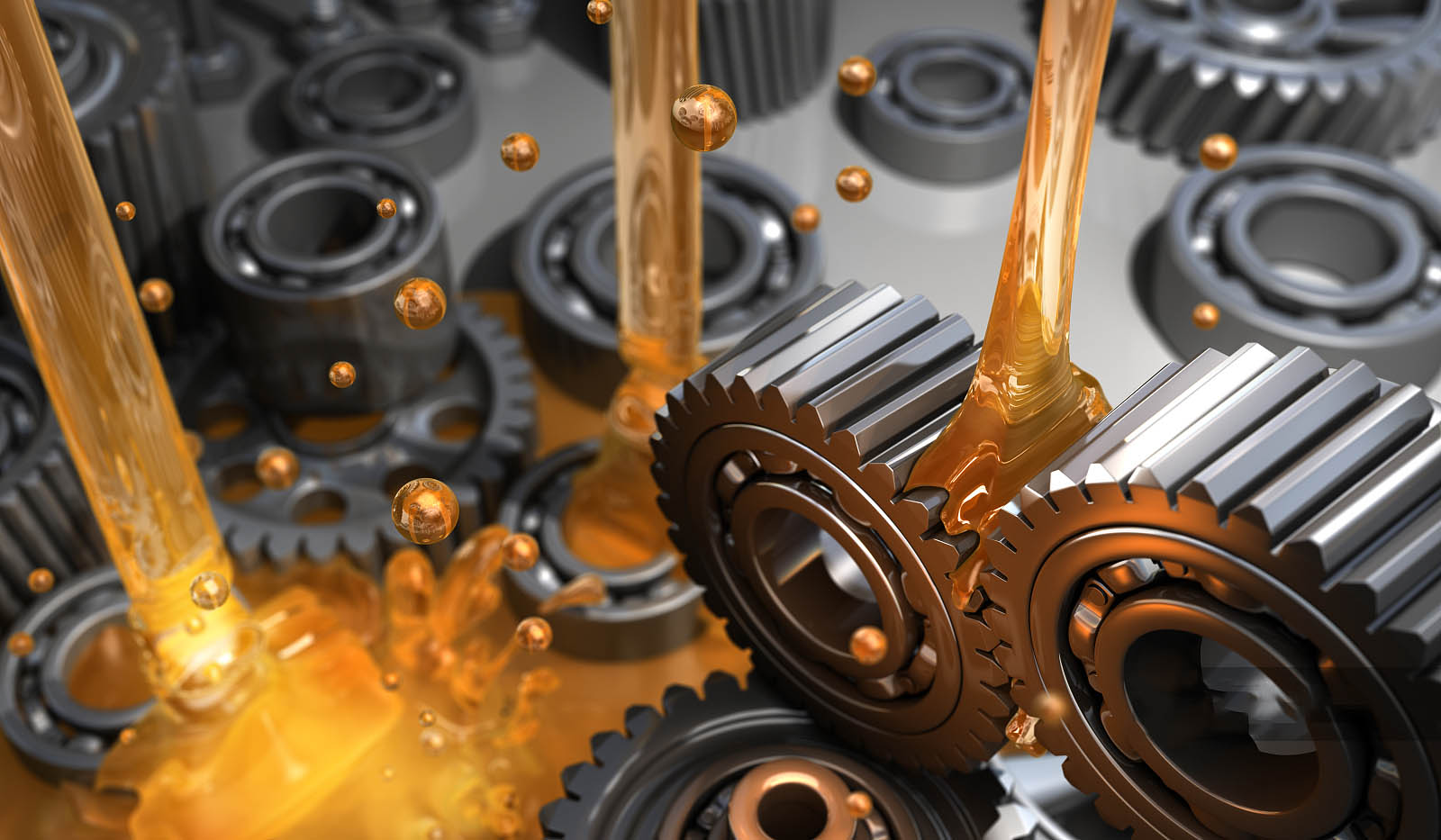
How much do you know about the “black technology of lubrication” in metal working fluids?
Polyester is a compound synthesized through the esterification reaction of polyols and organic acids (such as fatty acids), and is gradually becoming the core component of high-end lubricants. The polar groups in its molecular structure can form a stable lubricating film on the metal surface. At the same time, the long carbon chain structure gives excellent thermal stability, allowing it to replace traditional mineral oil in aviation,automobiles, industrial equipment and other fields to achieve more efficient and environmentally friendly lubrication effects.
Core advantages: Comprehensive breakthrough from lubrication to environmental protection
The advantages of polymeric esters stem from the versatility of their molecular design, embodied in four key dimensions:
1. Super lubrication and anti-wear protection
The polar groups of polymeric esters (such as ester groups) can be firmly adsorbed on the metal surface to form a lubricating film with a thickness of nanometers, significantly reducing the friction coefficient. In the metal working fluid, adding 5%-10% BE1720, BE1740 fully synthetic and semi-synthetic formula of polyester, the experimental data of tapping torque can judge that the tool life can be extended by more than 30%. This feature is especially suitable for high-load processing (such as deep hole drilling, gear cutting), and can effectively prevent "tool sticking" or "sintering".
2. Both high temperature stability and low temperature flow are considered.
Compared with mineral oil, polyester has higher oxidation stability and is less likely to produce sludge or carbon deposits. At the same time, its low-temperature viscosity performance is excellent. For example, polymethacrylate polymer ester can still maintain good fluidity at -40°C, solving the "cold start wear" problem of traditional lubricating oils - 70% of engine wear occurs during the cold start stage, and polyester can form an effective oil film at the moment of start.
3. Environmentally friendly and regulatory compliant
Some polymeric esters (such as long carbon chain fatty acid esters) are biodegradable, with a biodegradation rate of more than 90%, which is much higher than the 30% of mineral oil. This enables it to meet the requirements of environmental regulations such as EU REACH and US EPA and reduce waste liquid treatment costs. For example, the polymer ester used in metal working fluids is completely water-soluble. The aqueous solution is colorless and transparent with no pungent odor, which is in line with the trend of green manufacturing.
4. Multifunctional additives synergize
Polyesters serve not only as base oils but also as multifunctional additives. Low molecular weight polymethacrylate exhibits excellent shear stability (shear loss is 15 times lower than traditional viscosity modifiers) and anti-wear properties (wear is reduced by 2-3 times) in base oils. It also improves the viscosity index, allowing the lubricant to maintain stable performance over a wide temperature range.
Application scenarios: Precise adaptation from aviation to industry
The application of polyester covers many high-demand fields, and its performance advantages are maximized in different scenarios:
1. Aerospace: Reliable lubrication in extreme environments
Perfluoropolyether (PFPE) polymer ester is a key material in the aviation field. Its molecule contains only three elements: C, F, and O. The carbon chain is completely shielded by fluorine atoms, and it has extremely strong chemical inertness and thermal stability. In the aerospace industry, PFPE is used in rocket engine turbine pumps, satellite attitude control mechanisms and other components. It can maintain stable viscosity in the temperature range of -60°C to 300°C, and has extremely low vapor pressure (<10⁻⁶ Pa) to avoid volatilization failure in vacuum environments. For example, after using PFPE grease for the solar wing drive mechanism of a certain type of satellite, the service life was extended from 5 years to 15 years.
2. Automotive engines: Coping with high load and emission challenges
Honey well H 9 series engine oil uses multi-titanium honeycomb oil film technology, and its core component is modified polymer ester. This
technology can form an oil film within 3 seconds when the engine is cold-started (-30°C), reducing cold-start wear by 70%; under high-temperature (150°C) and high-load conditions, the oil film strength still maintains more than 90%, effectively suppressing the phenomenon of low-speed pre-ignition (LSPI). This type of polyester engine oil also meets the National VI emission requirements and reduces particulate emissions in exhaust gases by up to 15%.
3. Industrial equipment: reduced long-term operation and maintenance costs
In gear and hydraulic fluids, polymeric ester base oils (such as polyol esters) have excellent compatibility with additives. In a patented formula, after compounding 40-60% polyol ester and 20-40% diester, the thermal oxidation stability is increased by 40%, the evaporation loss is reduced by 30%,
and the equipment oil change cycle is extended from 6 months to 12 months. For example, after using this formula for the rolling mill gearbox of a
certain steel plant, the annual maintenance cost was reduced by 200,000 yuan.
4. Metal processing: efficient solutions for difficult-to-machine materials
For difficult-to-machine materials such as stainless steel and titanium alloys, polymeric ester cutting fluids can significantly improve processing
efficiency.
Technology Trends: Molecular Design and Sustainable Development
The future development of polyesters focuses on two directions: **high performance** and **green**.
Molecular structure optimization
Hyperbranched polymeric esters (HBP) are current research hotspots. Its three-dimensional spherical structure reduces intermolecular entanglements, and its shear stability is more than five times higher than that of linear polymers, while its low-temperature viscosity is reduced by 20%. For example, a certain hyperbranched polymethacrylate additive in base oil has a viscosity index of up to 180 (traditional linear polymer is 150) and reduces wear by 30%.
Bio-based raw material substitution
Bio-based polymeric esters prepared from vegetable oils (such as palm oil and rapeseed oil) are gradually emerging. The biodegradation rate of this type of polymer ester can reach 95%, and the raw materials are renewable. For example, a plasticizer compounded by epoxy fatty acid methyl ester and chlorinated fatty acid methyl ester can increase the stability of lubricating oil by 25% while reducing dependence on fossil resources.
Multifunctional integration
In the future, polyester will develop towards "one dose with multiple effects". For example, polyalkyl methacrylates containing amine derivatives not only increase the viscosity index, but also function as dispersants to inhibit sludge formation. After a patented product is added to engine oil, the sludge rating is improved from level 4 (severe) to level 1 (slight), while fuel economy is improved by 5%.
Summary: Through the precise design of molecular structure, polymeric ester has achieved the unity of lubrication performance, thermal stability
and environmental protection, and is becoming the core driving force for the lubricant industry's transformation from the "mineral oil era" to the
"synthetic oil era". In the future, with the development of molecular simulation technology and bio-based raw materials, polyester will further break through the performance boundaries and promote the efficient and sustainable operation of high-end equipment.